The Franco Piavoli Planet
In Conversation with Franco Piavoli
by Juliet Belisario
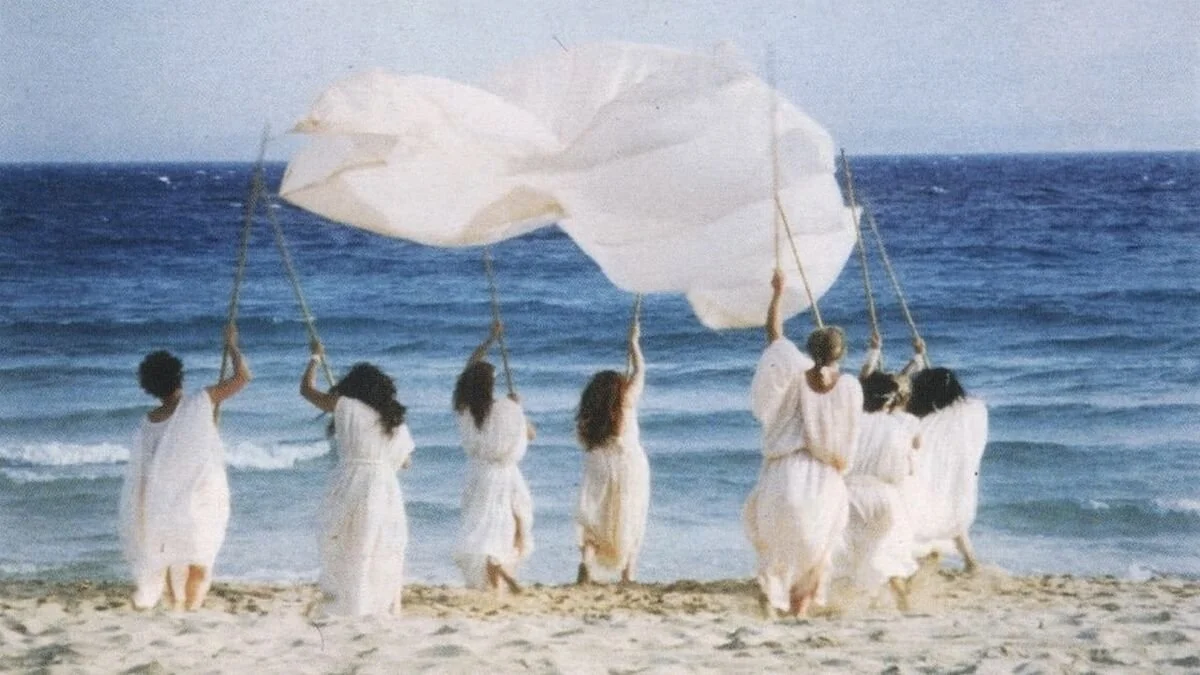
Nostos: The Return. 1989. Dir. Franco Piavoli.
Interview date: August 27, 2026. Publication date: October 9, 2026. Via Zoom.
With much thanks to my interpreter, Caterina Cuccurullo, as well as to Franco Piavoli’s son, Mario Piavoli, and programmer Cecilia Ermini, for assisting in interpretation and facilitation. Much of the following conversation has been translated from Italian to English, and the interview has been edited and condensed for clarity.
Franco Piavoli is an Italian filmmaker known for his poetic, visually striking style. His films explore nature and the passage of time through elemental imagery and sound, often departing from conventional dialogue and narrative. Masters of cinema like Andrei Tarkovsky and Stan Brakhage have praised his unique vision, with Tarkovsky describing his debut feature as “a poem, concert, journey into the universe, nature, life… truly a different vision.”
First on the Zoom call is Franco Piavoli’s son, Mario Piavoli, who frequently collaborates with Franco and runs the independent production company founded by Franco, Zefiro Film. Italian programmer Cecilia Ermini joins next, who recently curated a program of Stan Brakhage’s films in Bologna. Before Franco joins the call, Mario shows the physical editing machine that Franco used to cut Il Pianeta Azzurro (The Blue Planet) in the early ‘80s. Through the call, Mario and Cecilia jump into the conversation to clarify Franco’s points and help jog his memory. At 93 years old, Franco remains deeply impassioned in the way he speaks and thinks about his own work.
Juliet: Before you began making your first films on 8mm, you were working in painting and photography. What did cinema allow you to express that those other art forms could not?
Franco: It allowed me to reproduce not only images, but also moving images and the way life moves, and to collect sounds and reassemble them to convey my perception of reality.
Juliet: In Il Pianeta Azzurro (The Blue Planet), you place tiny events in nature alongside enormous cosmic images. What interested you in bringing these different scales and forms of the physical world together?
Franco: The different scales mirror one another; even microscopic things become macroscopic when seen from a certain point of view. Large things can become more intimate.
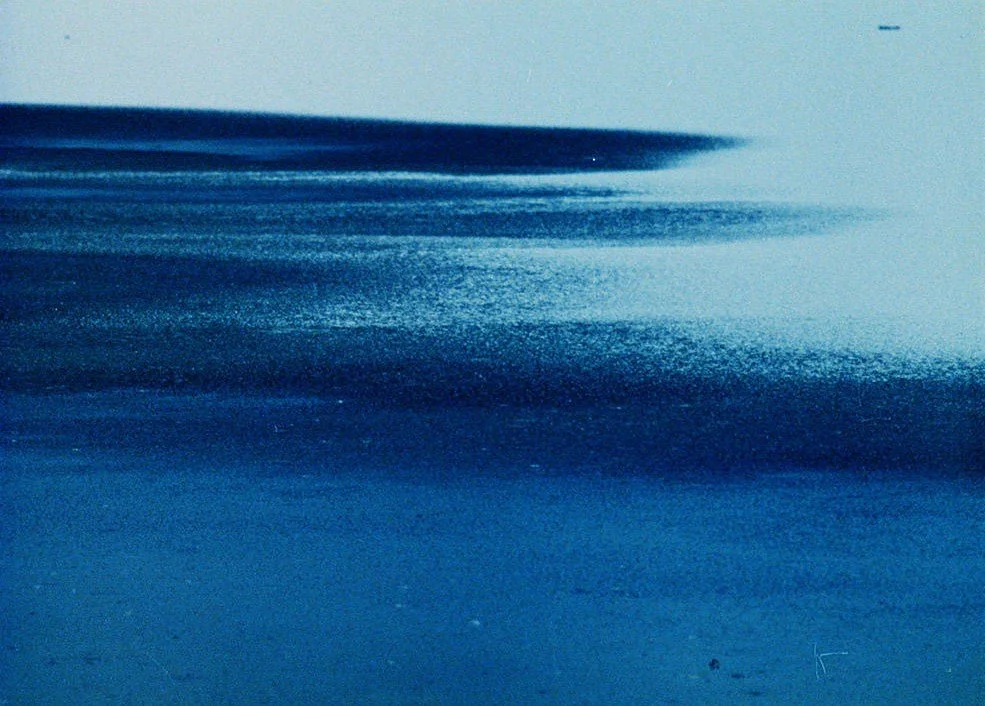
The Blue Planet. 1982. Dir. Franco Piavoli.
Juliet: In your films, voices are often replaced by sounds. You use imaginary language, or whispers and indecipherable fragments of voices. What interests you in interpreting the human voice as a sound, rather than as a coherent language?
Franco: The human voice, as it is, just like all the sounds of nature–the wind, the trees, the water–are all perceptions that communicate sensations, but also a sense of life, of the world we’re immersed in, and where we live. I really love to reproduce [the sounds of nature].
Juliet: In Voci nel Tempo (Voices through Time), you portray an entire human life through many different people rather than one protagonist. Why did you choose to represent life as a collective cycle?
Franco: By following real life, we encounter many people: family members, people close to us, but also strangers. Our contact with these other natural elements and with other people allows us to establish a deeper and broader relationship with the world we are immersed in.
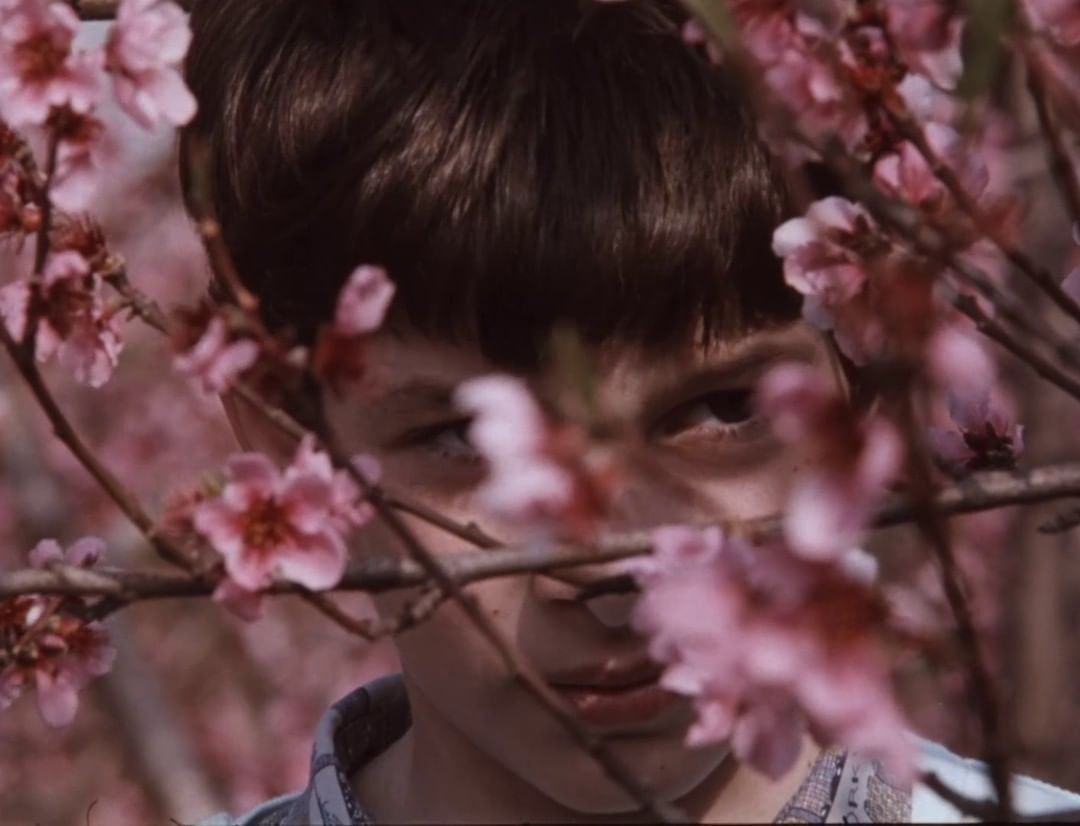
Voices Through Time, 1996. Dir. Franco Piavoli.
Juliet: Your films portray sexuality across the natural world, from human couples to animals and insects. What do these parallels reveal to you about human desire?
Franco: It runs through elements: human, animal, vegetal and mineral. There is a perceptual exchange between living creatures and inanimate ones–which seem to not have vitality, but they do. [This vitality] is still relatively little-known, but fundamental for establishing connections between everything that surrounds us, and it reveals more about the human sexual act, like filming insects and animals, but also the underlying, non-living elements. It allows us to perceive a universal connection among everything.
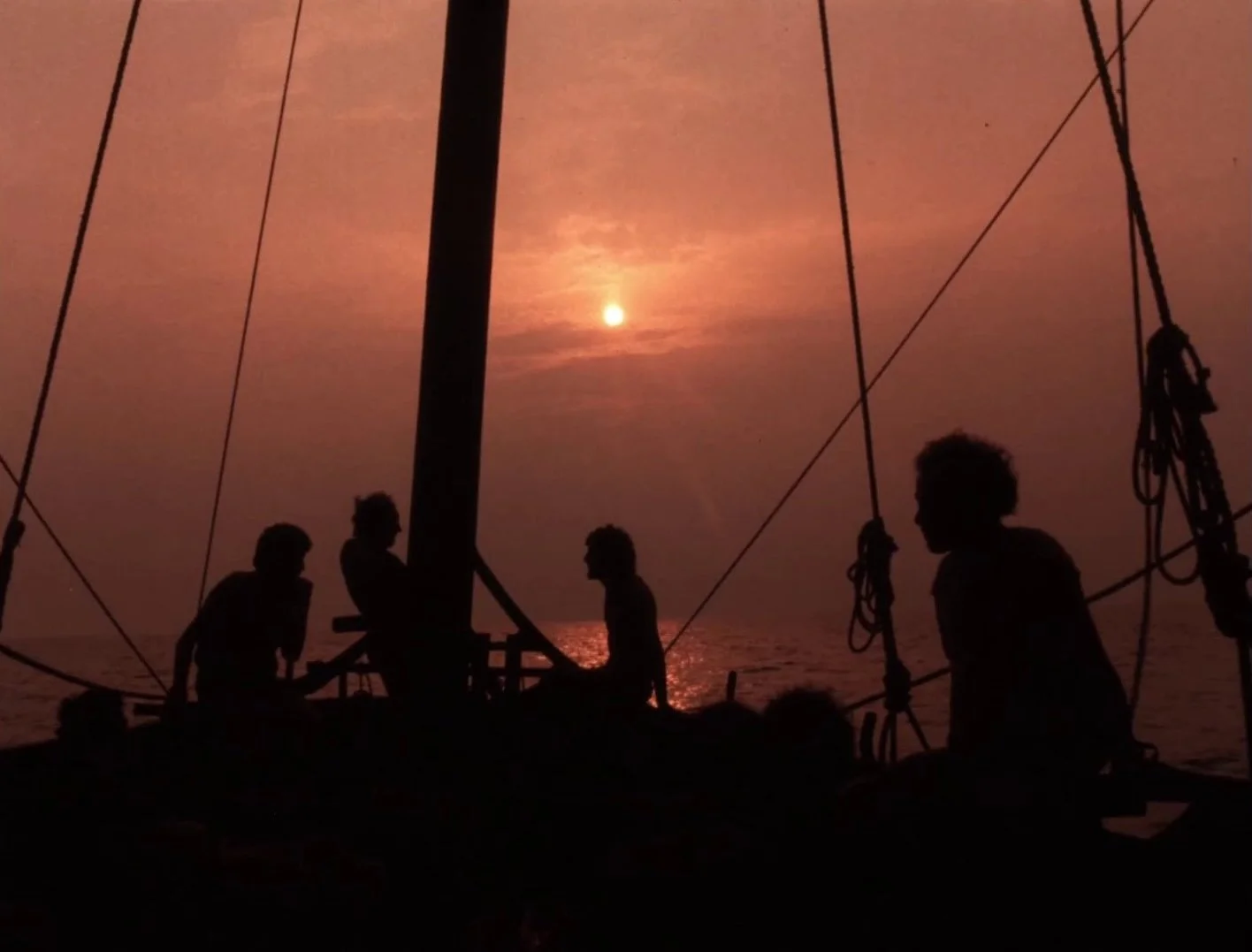
Nostos: The Return. 1989. Dir. Franco Piavoli.
Juliet: In moving between different lengths of time–a day, a season, or an entire lifetime–how do you find the rhythm that allows those different scales of time to coexist while editing?
Mario: Franco has always thought instinctively as he was filming, and already had the idea of what the work would look like as he was filming. He didn’t have a specific way of editing, because he’d already decided and thought about it while he was filming.
Juliet: Does that mean that writing and tightly planning your work is instrumental; rather than finding the film in the edit, you’re shaping it in pre-production and while you’re writing?
Franco: Yes. In some cases, there were very detailed scripts, but sometimes when filming, I’ve only had notes and just filmed the notes I had in mind.
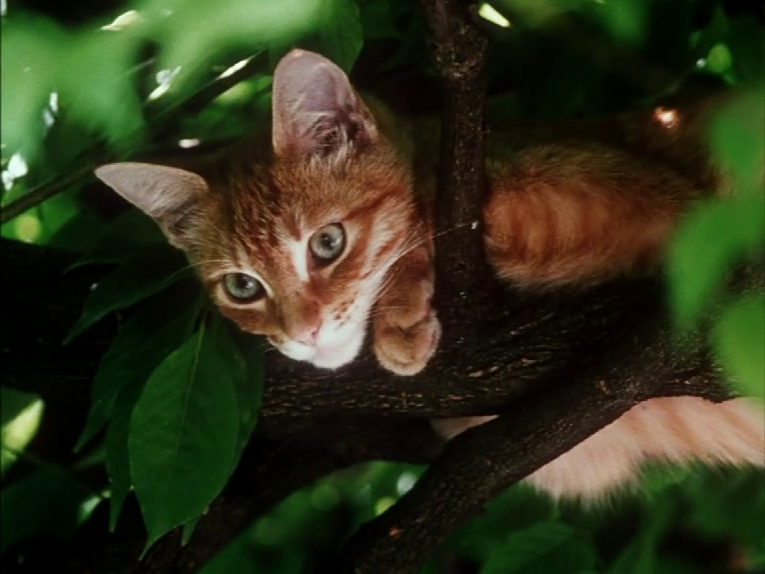
At the First Breath of Wind, 2002. Dir. Franco Piavoli.
Juliet: Are you working on anything new, a film, or any other kind of artistic endeavour? Is there anything you still have left to explore?
Franco: No.
Cecilia: Not in very recent years, but before COVID, Franco started filming and creating some small scenes about food; he wanted to make a short work about food, and the connection there is between living beings and nourishment. He filmed very different forms of food and nourishment: communion, children playing with food, animals feeding. He filmed a few scenes, though the project was never completed. He had a title, Il Pane Quotidiano (Daily Bread), which in Italy is an expression associated with the church. He wanted to make a connection between the ritual of food and religion, which are somehow connected.
Juliet: Thank you so much for taking the time to speak with me today, Franco. I hope you know how deeply your films are cherished by people around the world. It’s been a real pleasure.
Franco: Thank you very much for your patience. Today and yesterday, it’s been very tough for me physically, but it was a pleasure for me to speak to you as well.