Happy-Go-Mike Leigh
In Conversation with Mike Leigh
by Juliet Belisario
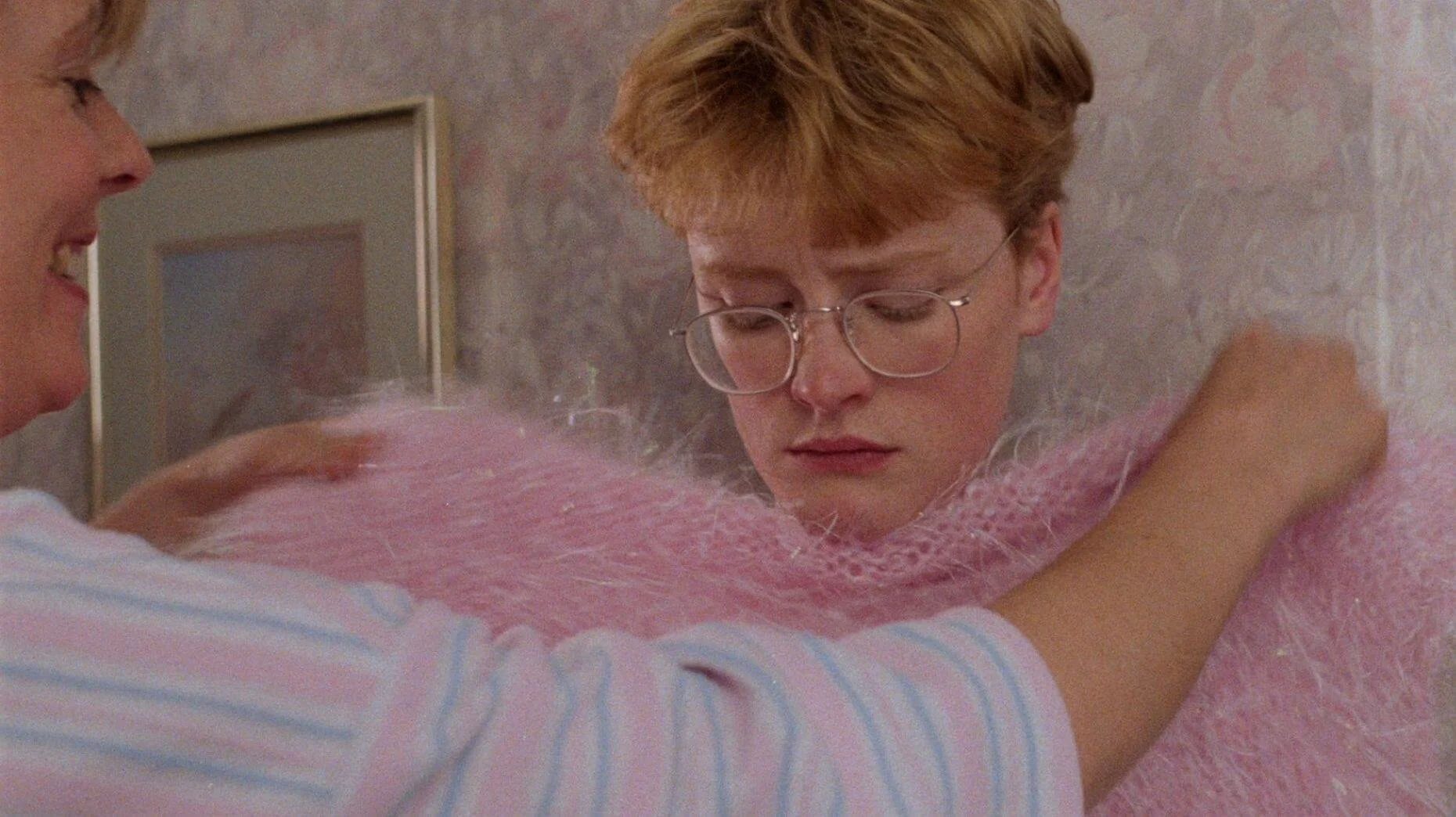
Life is Sweet, 1990. Dir. Mike Leigh.
Interview date: October 14, 2026. Publication date: October 15, 2026. Via Zoom.
This conversation has been edited and condensed for clarity.
Mike Leigh is a seven-time Oscar-nominated English filmmaker, directing work for film, theatre, and television since 1965. Known for his highly collaborative improvisational method, where he develops characters and storylines in months of rehearsals, he focuses on social-realist stories of class, family, and everyday relationships. He’s won the Palme d’Or for Secrets & Lies (1996), Best Director at Cannes for Naked (1993), and the Golden Lion for Vera Drake (2004).
Speaking to Mike Leigh is a little intense. He begins by asking what I’d originally wanted to talk about, noting I’d initially written to him before his latest film, and in his own words, his last film, Tender Loving Care (2026), was “part of the equation”. He asks, “You’re a director yourself, aren’t you?” I explain that I am, and describe the influence of his work and that of fellow British filmmakers Andrea Arnold and Ken Loach on my own filmmaking. Like his films, Leigh is both rigorous and witty. In our conversation, we discuss his decision to let actors improvise on camera for the first time in Tender Loving Care, before moving into editing, casting, and the experiences that drew him to adoption and social work.
How does a character’s way of speaking, including their silences, shape a scene’s rhythm for you?
The important thing is, as you probably know, we create characters from scratch, in a very three-dimensional way. That starts in the preliminary process that precedes the shoot. In the case of Tender Loving Care, it was like three months. Usually it’s longer than that. I get each actor to talk about loads of people they know, usually of the same sex. I pick people from that, and out of that, a character emerges. We start to talk not only about the idea of a character or the background of the character, but about how the actor’s going to play the character: the actual characterization. From an early stage, it’s about the actor moving around and finding the character: how the character moves, their attitudes to things, and how the character speaks. When you have people who are part of families, how they talk, the language they use, the dialect, the imagery they use, it’s all part and parcel. It’s an organic whole. It’s not a separate thing. The rhythm of a scene, apart from what’s required emotionally and dramatically, is a function of how they actually behave and talk. The rhythm of a scene, the symphonic quality, the tempo, the dynamics of a scene—all of those things—are all there to be tabulated and controlled, and choices are made. I don’t spend a lot of time thinking about those things, because they’re a function of how the characters are and how the characters behave. Those rhythms emerge, in the first place, organically. What you don’t see is actors improvising in front of the camera. It’s scripted very precisely through rehearsal. It’s not very often I say, “Let’s have a pause there.” Because the pause is very often organic. I mean, I do sometimes. It all comes out of the substance of the thing. There is one scene in Tender Loving Care which is unique as a scene in any of my films: it’s the only scene in any of my films that is actually improvised on camera.
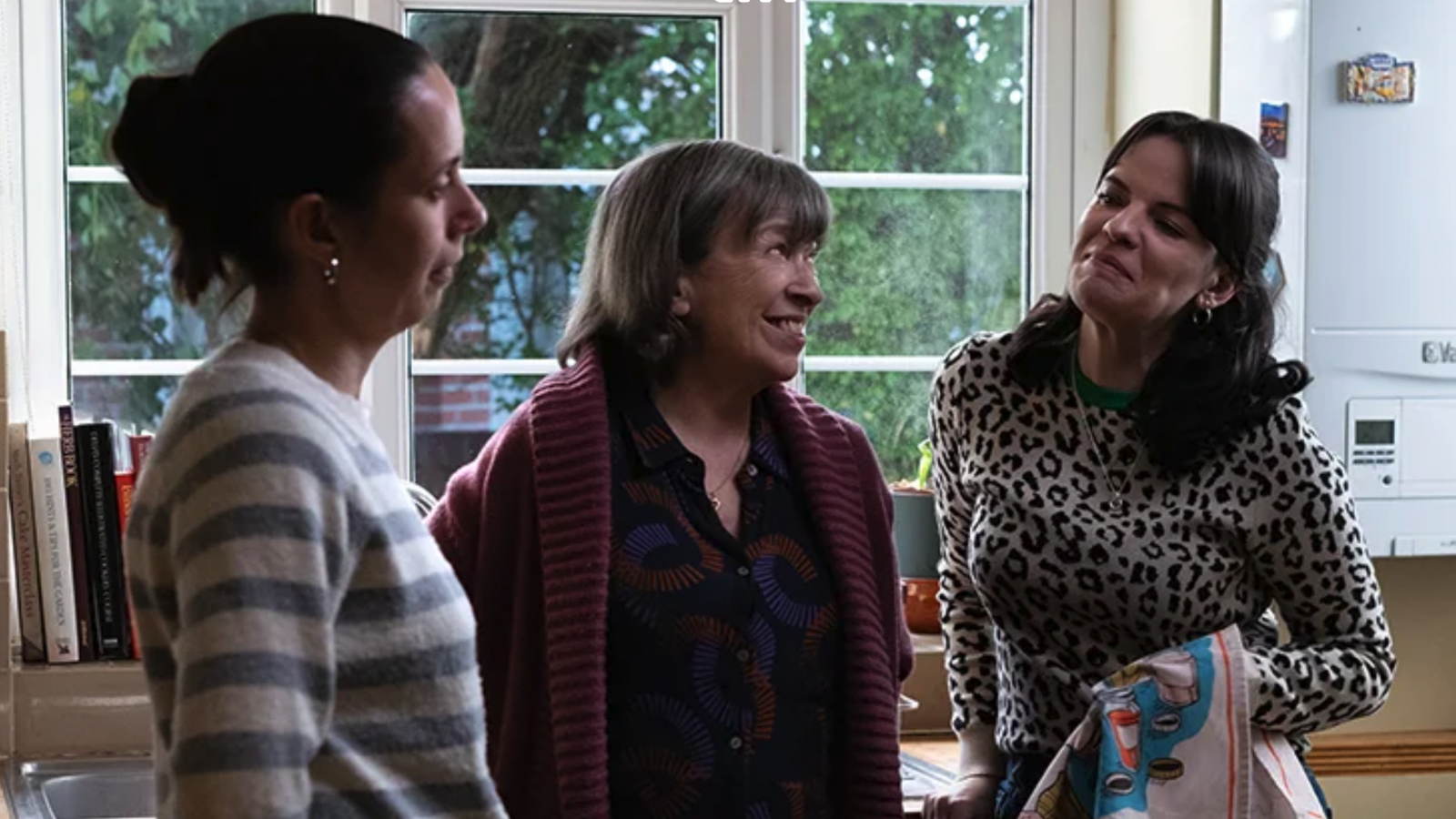
Tender Loving Care, 2026. Dir. Mike Leigh.
It’s the kitchen scene, right?
Absolutely, yes it is. Because they were so good together, those two. It seemed right for the nature of what’s going on. Amy’s having a tough time with this woman who’s arguing with her. They were really good at it, so I decided to break my normal discipline. It’s shot handheld, and we did lots of takes, took it away, and put it together in the edit. But the rhythms in that scene, to go back to your question, they’re all there, all natural.
Was it scary or strange at all, improvising on camera for the first time?
No. Because they knew what they were doing, and I know what I’m doing, and the cinematographer [Lucy Bristow] knows what she’s doing. It’s very exciting and great. [He laughs.]
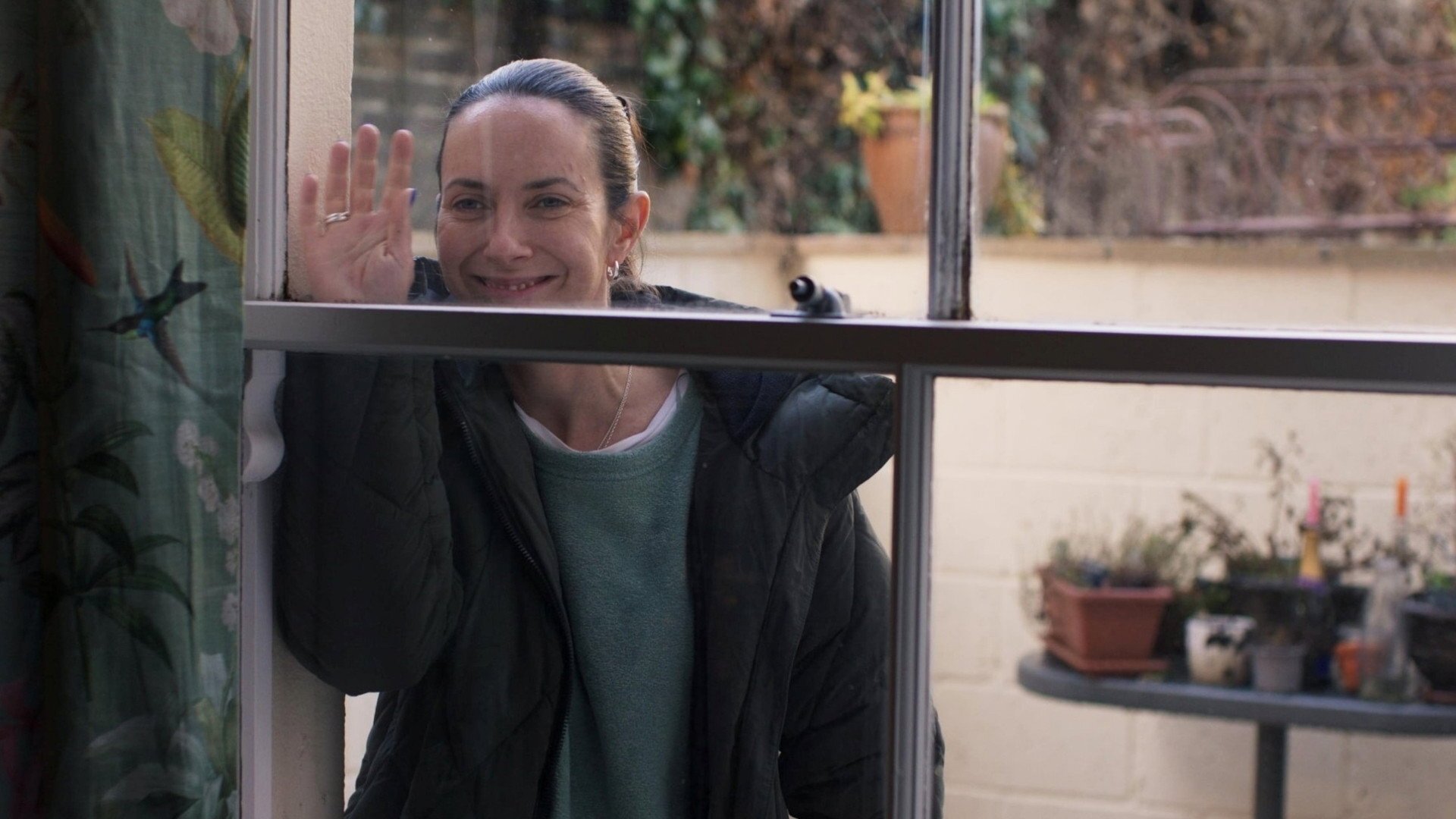
Tender Loving Care, 2026. Dir. Mike Leigh.
There’s a clear, shared, and deep history between Amy and Rosie in Tender Loving Care, but there’s a lot we don’t see. This is a thread in a lot of your films: they’re very complex relationships, like real life, but we’re only invited into one part of their lives. What kinds of particular moments from their past did you explore together?
The tip of the iceberg. In a way, I don’t need to explain that. If you spend a substantial amount of time actually building the relationships, the foundations, it’s all there. You’ve got this, obviously, from the way you’ve just put the question. It’s obvious that there’s a massive amount of stuff in the foundation of the relationship that you’re never going to know about. But it’s there, and it’s motivating what they are doing organically, in the moment. They’ve created a real relationship. When they go into character, they are being real. That’s not just acting, pretending to be real on the surface. It’s actually three-dimensional and organic. You can go in any direction with them, and it’s all there. Their relationship goes back to when they were students.
I was curious about working with your editor, Tania Reddin, and finding the rhythm between the evenings of the women drinking wine together and the encounters with their clients. How did you approach finding that humour in the edit?
First of all, all films, whatever they are, are made in the edit, ultimately. That’s a fact of film. With the minor exception of the unusual scene I talked about in the kitchen, my films are very disciplined in the way they’re shot. What we don’t take into the edit is all kinds of bits and pieces where the actors couldn’t remember half the lines, or weren’t quite sure how to play the character in that particular moment. It’s all organic and solid. Generally, we don’t go for a lot of takes, or have takes that break down in the middle. What we take to the edit is pretty solid. You asked me about working particularly with Tania Reddin. This is the second film of mine she edited; she did Hard Truths (2024). During the shoot, I would call her every night on the phone and see how she was getting on with the previous day’s rushes. She wouldn’t be talking about technicalities. She would be saying it’s great the way the relationships are developing, and it’s great to see these women. She was onto the content. That’s the key to a great editor: it’s about the substance of what’s going on, not the mechanics. Like any editor, she’s good at the practicalities. You do an assembly, then a rough cut, then you distill it down, then you change things around a bit. What you’re talking about with the rhythms, which is something you are obviously very concerned with, they are there. You find them: the symphonic shape of the thing. That’s what it’s all about.
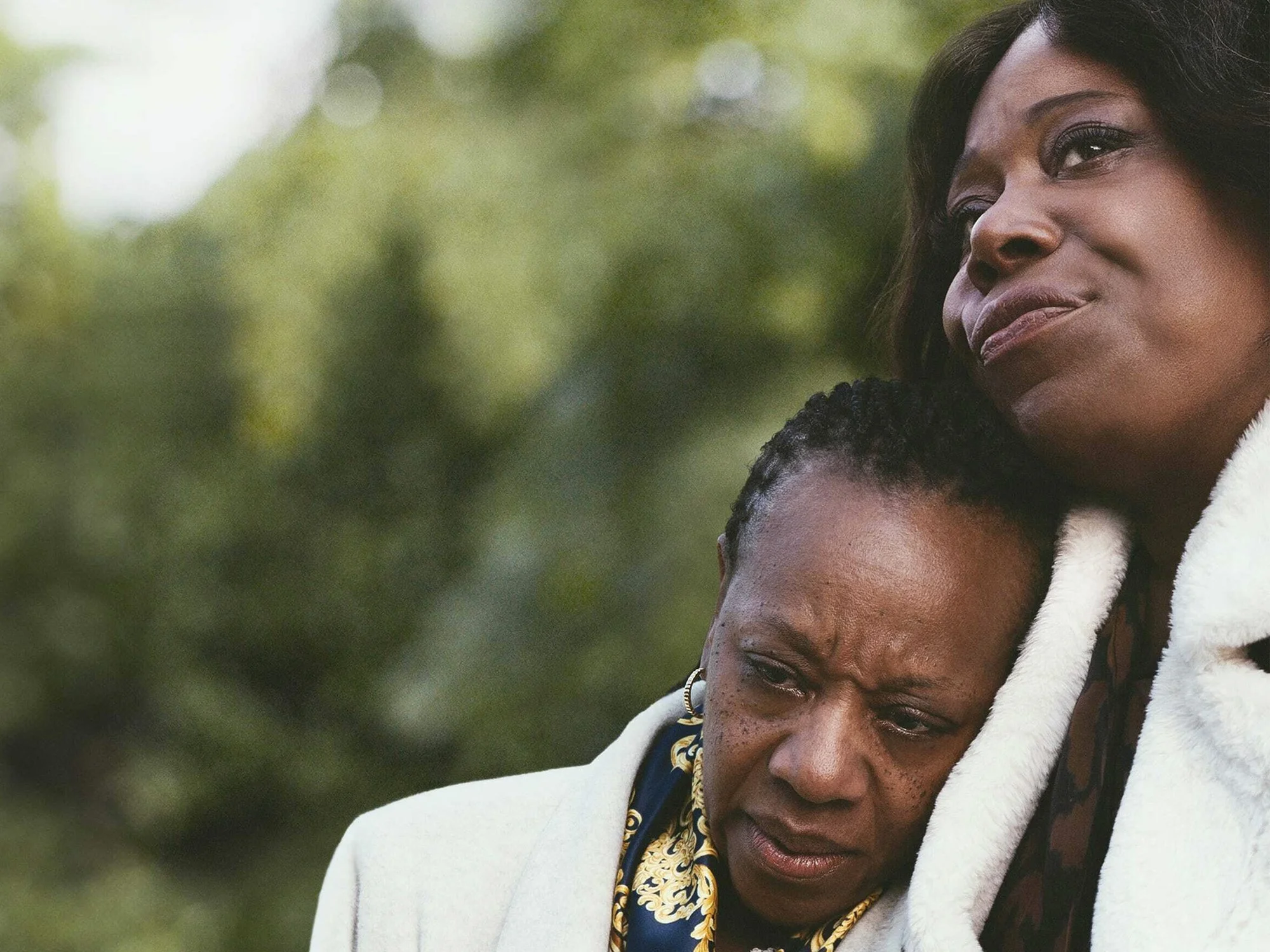
Hard Truths, 2024. Dir. Mike Leigh.
In casting, what specifically do you look for? You build characters with your actors. If I’m not mistaken, you don’t ever write your characters before casting.
I don’t write anything. There’s no writing involved, such as it is. It’s scripted, finally, through rehearsal. There have been occasions, particularly my historical films, such as Topsy-Turvy (1999), Mr. Turner (2014), and Peterloo (2018), where we know we’re dramatizing actual people who’ve existed. With these contemporary films, I may have notions and possibilities, but they’re only notions and possibilities. In Happy-Go-Lucky (2008), I had a feeling of the kind of role that Sally Hawkins’ character should play, because I wanted to work with Sally Hawkins, whom I’d worked with before, and tap into her energy. Not that she is the character Poppy. My actor who plays the driving instructor: I had no idea what he was going to do when we cast him. Gradually, we started to dig around, and that character emerged. First of all, I only work with character actors, people who play characters and don’t play themselves. People who want to, and are good at, doing real people that aren’t like them. Obviously, I only work with intelligent actors, and not all actors are intelligent, as you know. [He laughs.] I only work with actors who’ve got a sense of humour, because not all actors have got a sense of humour, as you know. And I’m very careful not to get into the wrong situation by having those actors, of whom there are many, who are uncomfortable about not knowing what it’s going to be, and are worried about their image and their ego. That’s important too. That’s what you would expect, I guess.
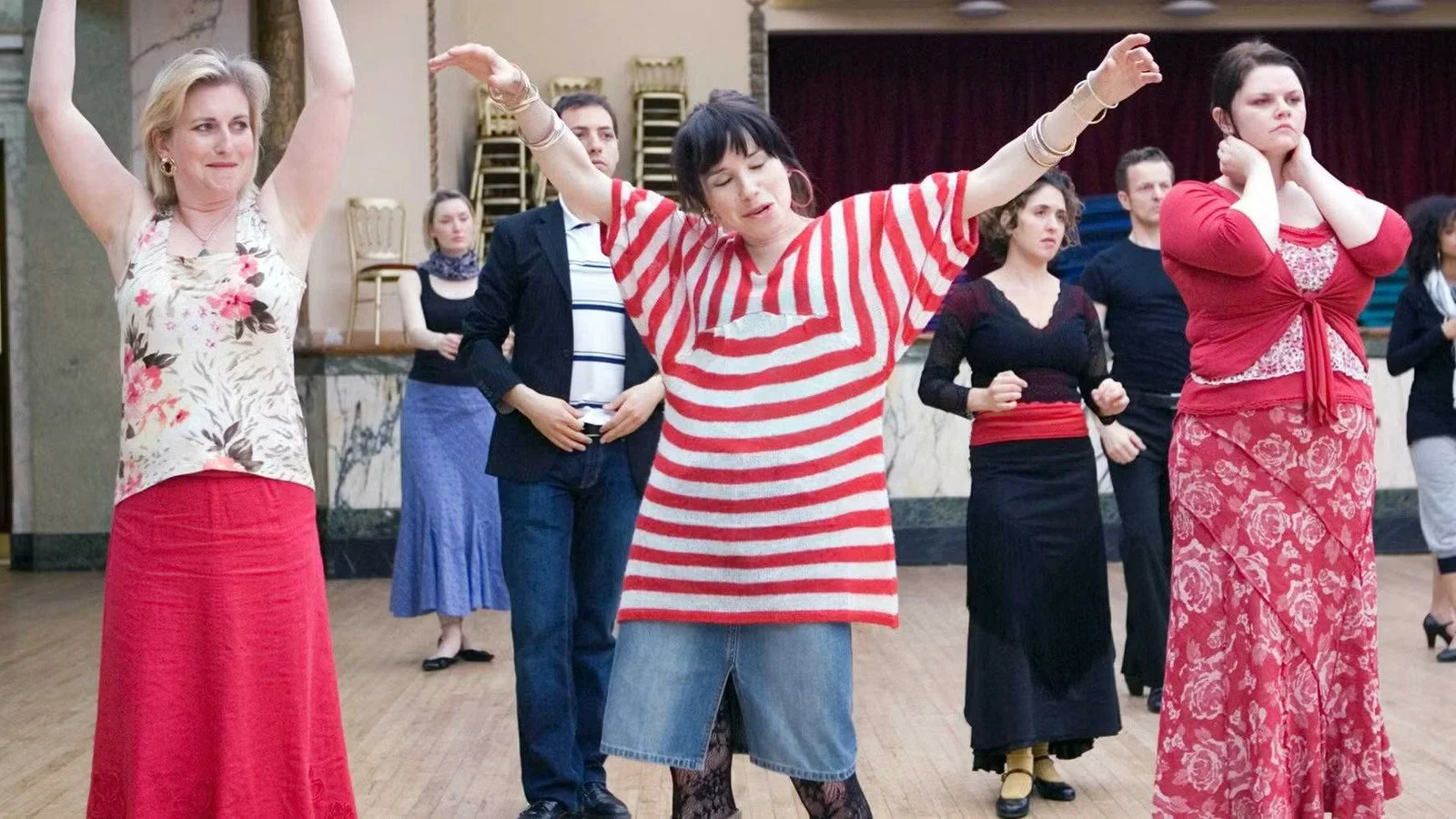
Happy-Go-Lucky, 2008. Dir. Mike Leigh.
In Secrets & Lies and Tender Loving Care, there’s such empathy in the way you approach adoption, foster children, and social work. These things are close to me in my personal life, but I don’t often see them shown with empathy on screen. What made you want to tell those stories?
Well, it varies. As far as Secrets & Lies goes, there are people close to me, in my family, who adopted kids. I decided to explore adoption. What became very clear to me, once I started to look into it and research it, is that it was more important to focus on the kid that’s given away and the mother that gives the kid away than on the people who adopt, the adoptive parents. That was the genesis, and then I went on to research it. So far as social work, it just felt like something I wanted to explore, and it made sense in terms of the characters we were creating, Amy and Rosie. I wanted to look at it because it’s a current issue. The film didn’t start as a polemic about social work. It sort of grew, and it became obvious that that’s what I should investigate. In Tender Loving Care, it wasn’t as specific a starting point as it was for Secrets & Lies, but that’s academic. In the end, it is what it’s about, and it doesn’t really matter where it starts, as long as we know where it finishes. Have you got a project on the go at the moment?
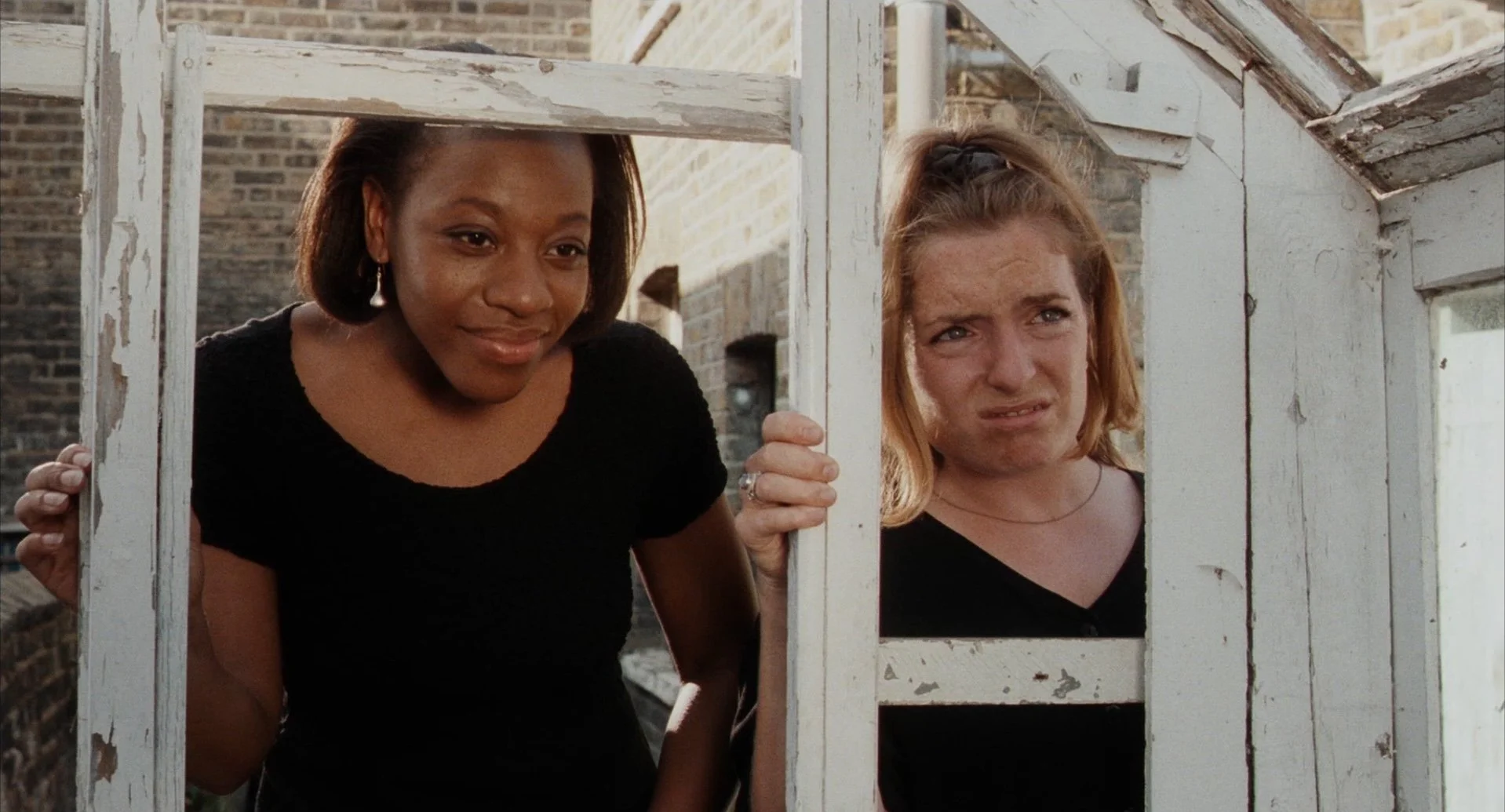
Secrets and Lies, 1996. Dir. Mike Leigh.
I do. I have another short I’m making. I’m in the middle of test shooting it right now.
What’s it about?
It’s about foster care and a foster family, based on my own experience. A young girl goes into foster care skeptically, builds these relationships and tenderness. It’s about this girl, her life, and this time.
Sounds good. When are you going to shoot that?
In January.
Great, well, good luck with it.
Thank you for speaking to me.
Great pleasure, and good luck to you.